


Introduction to Fish Finders
Fishing used to be about patience, intuition, and a little bit of luck. You’d cast your line, cross your fingers, and hope the fish were feeling generous that day. Then came the fish finder and everything changed.
A fish finder is like giving your fishing trip a pair of underwater eyes. Instead of guessing where fish might be hiding, you can actually see what’s happening below the surface. Whether you’re a weekend hobbyist or a hardcore angler, this tool can completely transform how you fish.
What Is a Fish Finder?
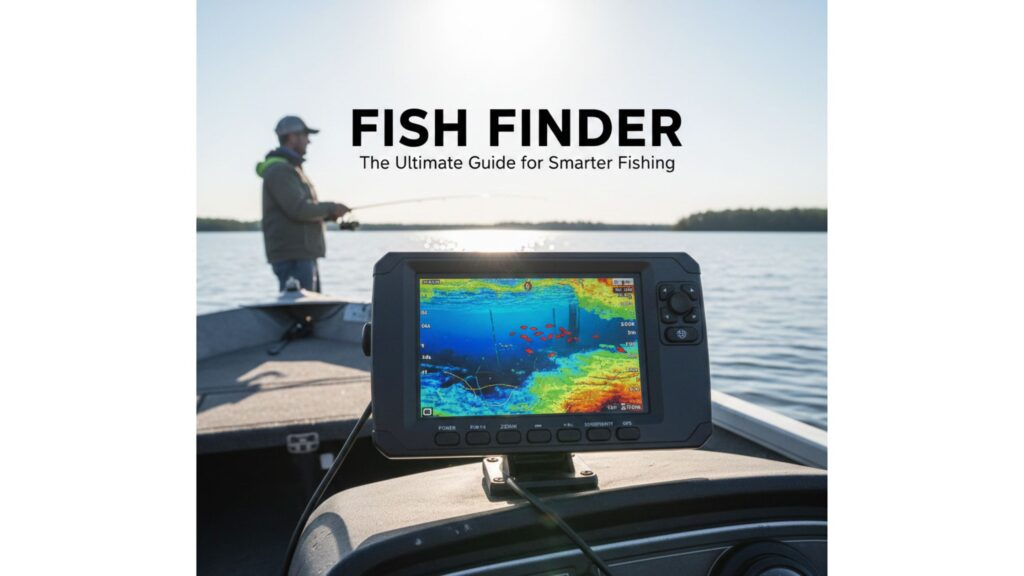
At its core, a fish finder is an electronic device that uses sonar technology to detect fish, underwater structures, and depth. It sends sound waves into the water and reads the echoes that bounce back. Those echoes are then translated into visual data on a screen.
Think of it like echolocation for humans similar to how dolphins “see” underwater using sound.
Why Fish Finders Changed Fishing Forever
Before fish finders, anglers relied on experience, water conditions, and local knowledge. Now? You can scan an area in seconds, find drop-offs, locate schools of fish, and adjust your strategy instantly. It saves time, reduces frustration, and boosts your chances of success.
How Fish Finders Work
Sonar Technology Explained Simply
Sonar stands for Sound Navigation and Ranging. The fish finder sends a sound pulse downward into the water. When that sound hits an object like a fish or the bottom it bounces back to the transducer.
The time it takes for the echo to return tells the device how deep the object is.
Active Sonar vs Passive Sonar
- Active sonar (used in fish finders) sends sound waves and listens for echoes.
- Passive sonar only listens for sounds and doesn’t send anything out.
For fishing, active sonar is the star of the show.
Transducers and Their Role
The transducer is the unsung hero of a fish finder. It’s the part that sends and receives sonar signals. A high-quality transducer can mean the difference between a blurry mess and a crystal-clear underwater picture.

- 7″ Color LCD Monitor: This Eyoyo underwater fishing camera features a 7-inch large TFT color screen with 800*480 pixels …
- Most Stable 1000TVL Camera: Equipped with an upgraded 1000TVL camera chip, this fishing camera delivers clearer images a…
- 12pcs Infrared Lights for Night and Ice Fishing: With 12 infrared lights, this underwater camera provides enhanced visib…
Types of Fish Finders
Portable Fish Finders
Perfect for anglers on the move. These are compact, battery-powered, and easy to transport. Great for kayaks, small boats, or even shore fishing.
Fixed (Mounted) Fish Finders
These are permanently installed on boats. They usually offer larger screens, more power, and advanced features. Ideal for serious anglers and offshore fishing.
Castable Fish Finders
Yes, you can literally cast these with your fishing rod. They sync with your smartphone and are excellent for bank fishing or quick trips.
Ice Fishing Fish Finders
Designed to work in freezing temperatures, these models often come with special transducers and displays optimized for vertical fishing.
Key Features to Look for in a Fish Finder
Display Size and Resolution
Bigger screens make it easier to read details, especially when you’re scanning large areas. High resolution equals sharper images simple as that.
Frequency and Cone Angle
- High frequency = better detail, less depth
- Low frequency = more depth, wider coverage
Cone angle determines how wide the sonar beam is. A wider cone covers more area but with less detail.
GPS and Mapping
Built-in GPS lets you mark hotspots, track routes, and navigate safely. Some models even include detailed lake maps.
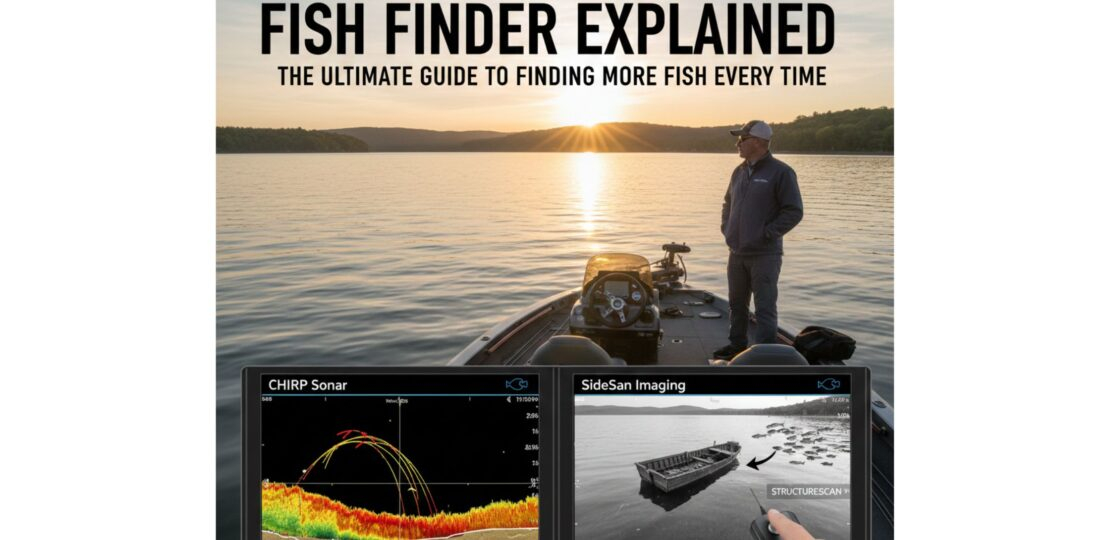
CHIRP Technology
CHIRP sends a continuous range of frequencies instead of a single one. The result? Clearer fish separation and better target identification.
Side Imaging and Down Imaging
These features provide almost photo-like images of what’s under and around your boat. It’s like switching from standard definition to HD.
Fish Finder for Beginners
Easy-to-Use Models
If you’re new, look for simple menus, auto settings, and clear displays. You don’t need every bell and whistle to catch fish.
Common Beginner Mistakes
- Cranking sensitivity too high
- Misreading fish arches
- Ignoring structure and focusing only on fish icons
Remember, practice makes progress.
Fish Finder for Professionals
Advanced Imaging Systems
Pros often rely on multi-frequency CHIRP, side imaging, and live sonar systems that show fish movement in real time.
Networked Fish Finder Systems
These allow multiple displays, shared data, and integration with radar, autopilot, and other marine electronics.

- Clear Vu scanning Sonar shows you more of what is in the water around your boat; This high frequency sonar gives near ph…
- The power of simple offers a keyed interface with dedicated buttons; The device is easy to use and easy to install; Avai…
- Waypoint map: Use the way point map to easily view, mark and navigate to locations such as brush piles, stumps and docks…
Best Fish Finders by Fishing Type
Kayak Fishing
Lightweight, compact, and power-efficient models work best.
Boat Fishing
Larger screens, powerful transducers, and GPS mapping shine here.
Shore Fishing
Castable and portable fish finders are the go-to choice.
Ice Fishing
Look for models with flasher modes and cold-resistant batteries.
Understanding Fish Finder Screens
Reading Fish Arches
Fish often appear as arches because of how they pass through the sonar beam. Bigger arches usually mean bigger fish but not always.
Identifying Structure and Bottom Composition
Hard bottoms show strong, thick lines. Soft bottoms appear thinner. Structure like rocks, weeds, and logs are fish magnets learn to spot them.
Fish Finder Installation Tips
Mounting the Transducer
Proper placement is crucial. It should be below the waterline and free from turbulence for accurate readings.
Power and Wiring Basics
Use the correct fuse, avoid interference, and keep cables organized. Clean wiring equals reliable performance.
Fish Finder Settings You Should Optimize
Sensitivity
Too low and you miss fish. Too high and the screen gets cluttered. Balance is key.
Depth Range
Manual depth settings can improve accuracy in specific conditions.
Frequency Selection
Match frequency to water depth and fishing style for best results.
Fish Finder Myths and Misconceptions
Do Fish Finders Really Show Fish?
They show returns, not actual fish pictures. Interpretation is the angler’s skill.
Are Fish Finders Only for Pros?
Not at all. Beginners can benefit just as much maybe even more.
Maintenance and Care
Cleaning and Storage
Rinse with fresh water after use, especially in saltwater. Store in a dry, cool place.
Software Updates
Manufacturers often release updates that improve performance and add features. Don’t skip them.
Are Fish Finders Worth It?
Cost vs Value
From budget-friendly models to high-end systems, there’s something for every wallet. The value comes from time saved and fish caught.
Impact on Catch Rates
While skill still matters, a fish finder dramatically increases your odds. It’s like fishing with insider information.
Future of Fish Finder Technology
AI and Smart Sonar
Artificial intelligence is starting to identify fish species and suggest tactics.
Mobile App Integration
Smartphone connectivity is making fish finders more accessible and customizable than ever.
Conclusion
A fish finder doesn’t replace skill it enhances it. It shortens the learning curve, boosts confidence, and makes every fishing trip more productive. Whether you’re chasing bass in a lake, trolling offshore, or drilling holes in the ice, a fish finder can be your most valuable fishing partner. Once you use one, it’s hard to imagine fishing without it.
FAQs
1. Can fish finders work in shallow water?
Yes, especially high-frequency and CHIRP-enabled models designed for shallow environments.
2. Do fish finders scare fish away?
No. The sonar signals are not strong enough to disturb fish behavior.
3. Are fish finders legal everywhere?
Most places allow them, but it’s always smart to check local fishing regulations.
4. Can I use a fish finder from the shore?
Absolutely. Castable and portable fish finders are perfect for shore fishing.
5. How long does it take to learn a fish finder?
Basic understanding can take a few trips. Mastery comes with practice and experimentation.

- READY-TO-FISH PERFORMANCE: Includes Active Imaging 3-in-1 transducer with CHIRP, SideScan, and DownScan with FishReveal …
- LIVE SONAR COMPATIBLE: See more and catch more with real time live sonar compatibility for ActiveTarget 2 XL
- FIND BETTER SPOTS FASTER: High-detail contour mapping highlights ledges, drop-offs, and productive fishing zones
RELATED POSTS
View all

CDR Electronics 101: Everything You Need to Know About Clock and Data Recovery
January 24, 2026 | by Marketree
Everything You Need to Know About BRK Electronics Smoke Detectors
January 24, 2026 | by Marketree